AIは、本当に「言って」いるのか?――Meaning AuditからAIと「主張」の哲学を訪ねる
会議で何気なく口にした「AIもそう言っていました」。その「言っていた」は、人に使う「言った」と同じなのか。AI と「主張」をめぐる最近の哲学を訪ね、AI が話し手かという問いと、情報源になりうるかという問いを分けて考える。シリーズ「意味の地図をつくる」第16回。
会議で何気なく口にした「AIもそう言っていました」。その「言っていた」は、人に使う「言った」と同じなのか。AI と「主張」をめぐる最近の哲学を訪ね、AI が話し手かという問いと、情報源になりうるかという問いを分けて考える。シリーズ「意味の地図をつくる」第16回。
「私たちは、この事業を継続すべきだと考えています。」会社名義の報告書のこの「私たち」は、誰なのか。集団の認識論と Hobbes の「author」を訪ね、書いた人・言った人・引き受けた人のずれを考える。シリーズ「意味の地図をつくる」第13回。
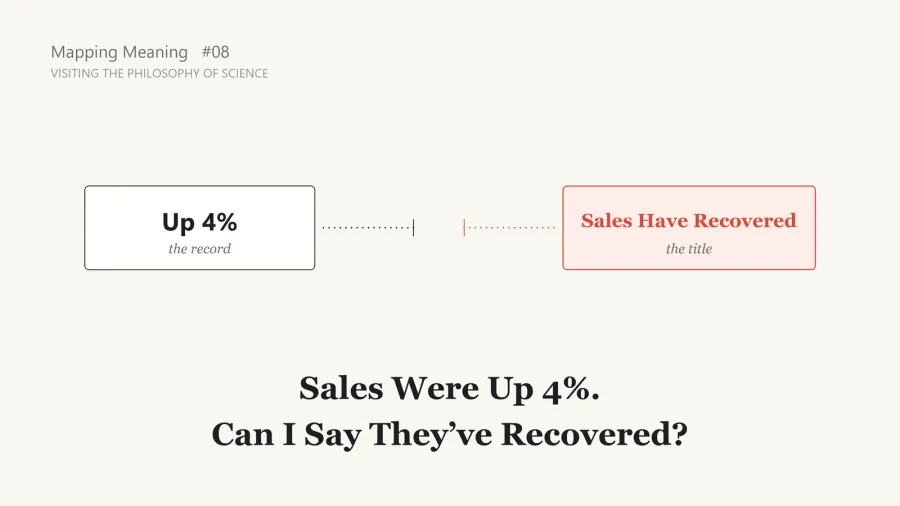
Sales are up 4%, but does that justify saying they have recovered? Mapping Meaning visits the philosophy of science to ask how evidence bears on a conclusion, what other explanations fit the same record, and how strongly a claim can be stated on that basis. The last field visit of Phase 1.
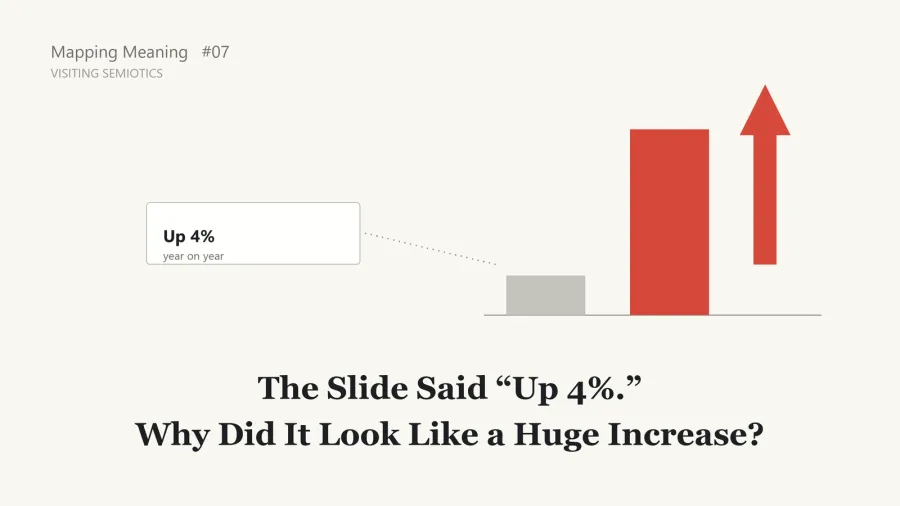
A slide says sales are up 4%, yet its bars, color and arrow make the increase feel much larger. Mapping Meaning visits semiotics to ask how charts, colors and other visual signs take part in meaning, alongside the words on the page.
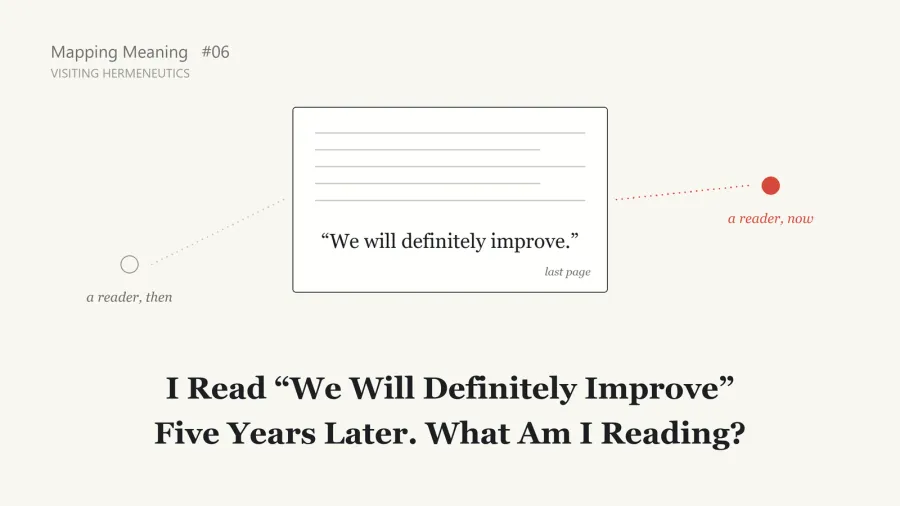
A five-year-old report still says, "We will definitely improve." Mapping Meaning visits hermeneutics to ask what is being read when the text stays the same but the reader, the context, and the questions have moved.
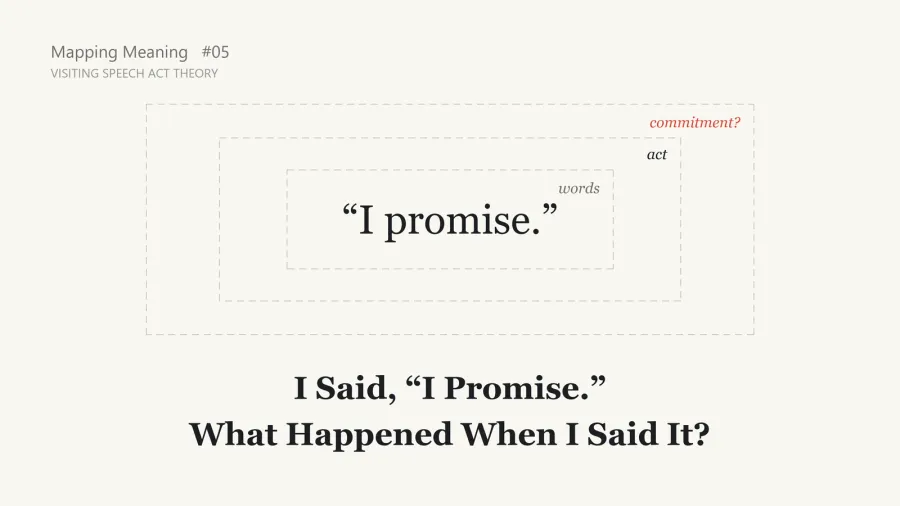
Saying "I promise" can do more than convey information. Mapping Meaning visits speech act theory to ask what we can do with words, under what conditions those acts come off, and what may be taken on by speaking, or by a document.
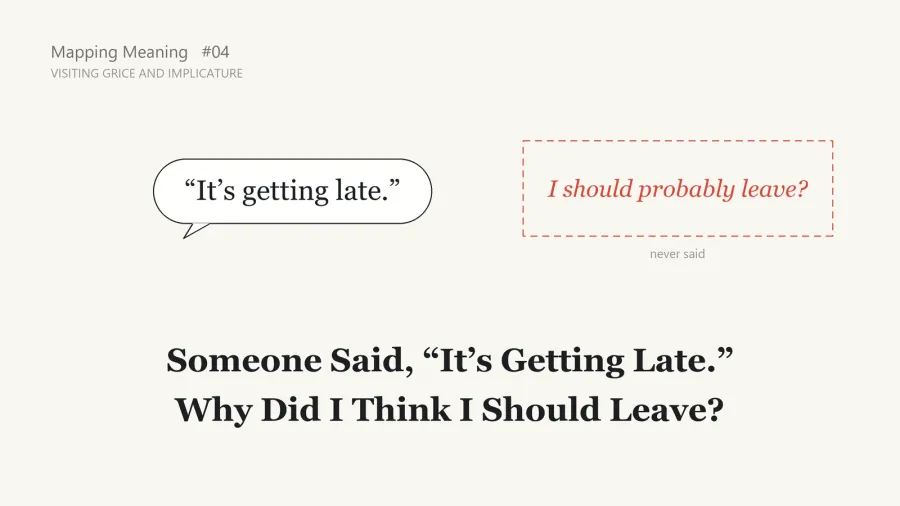
Someone says "It's getting late," and I hear "I should probably leave." Mapping Meaning visits Grice and implicature to ask how a listener can come to take more than was said, and why what a reader infers is not automatically what a writer intended.
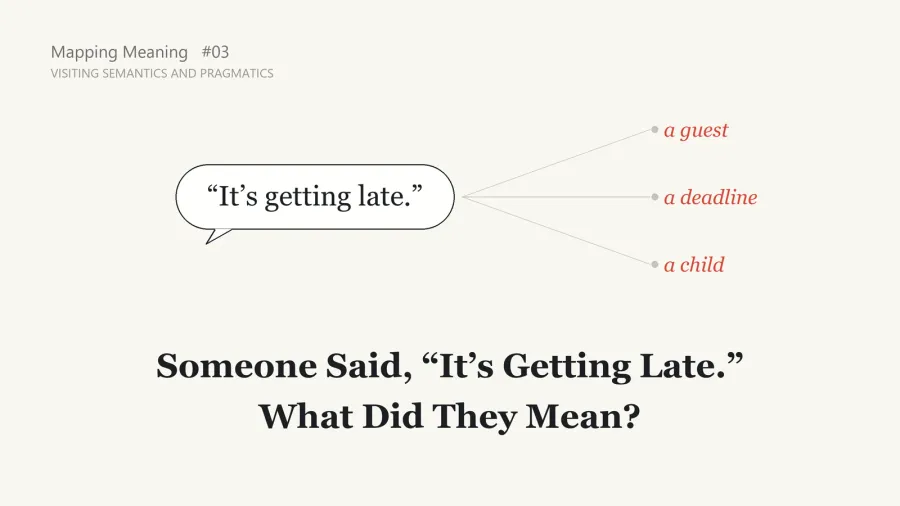
The same words can convey different things in different situations. Mapping Meaning visits semantics and pragmatics to ask whether the line between what a sentence means and what context adds can be drawn cleanly, and what that changes in how a document is read.
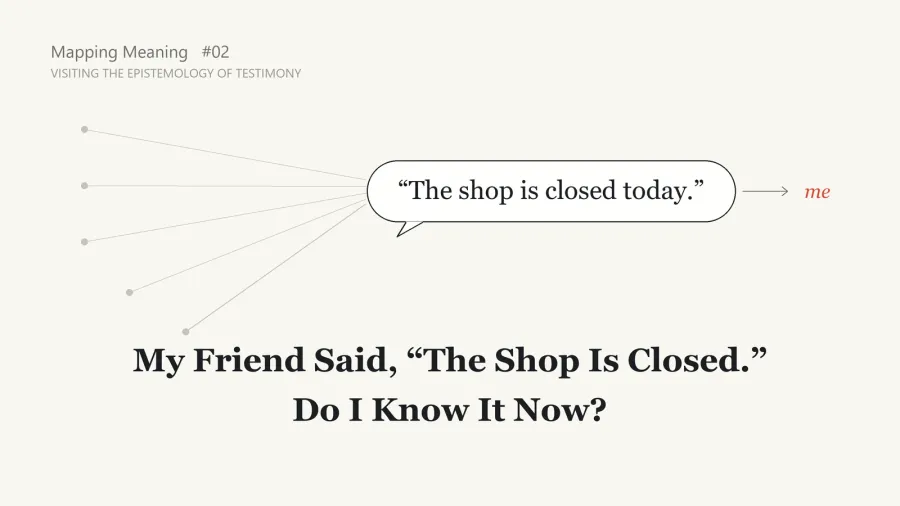
A friend says a shop is closed, and I change my plans without checking for myself. Mapping Meaning visits the epistemology of testimony to ask when another person's words can become knowledge, and why "who said it" and "what did they base it on" are different questions.
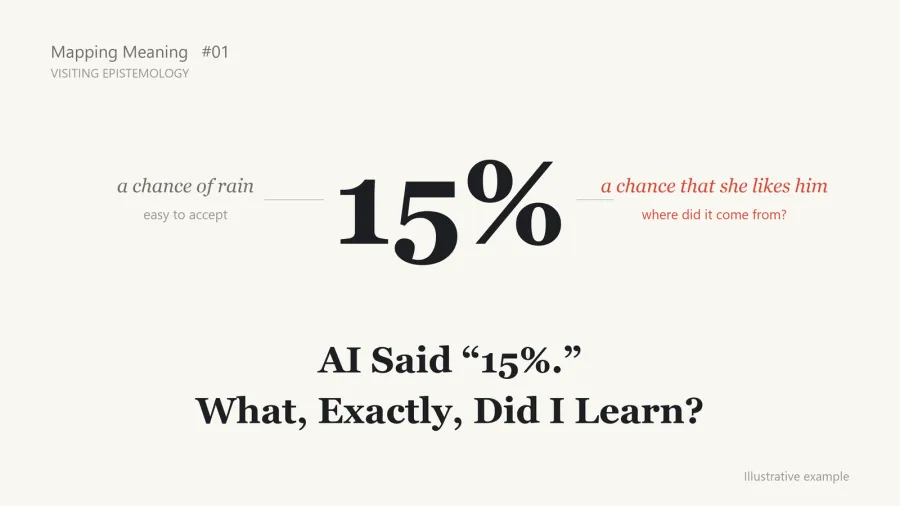
An AI gives a probability of 15%. What would it take to say that I now know something? Mapping Meaning visits epistemology to look at belief, justification, evidence, and knowledge, and at why a record is not yet a reason to believe.
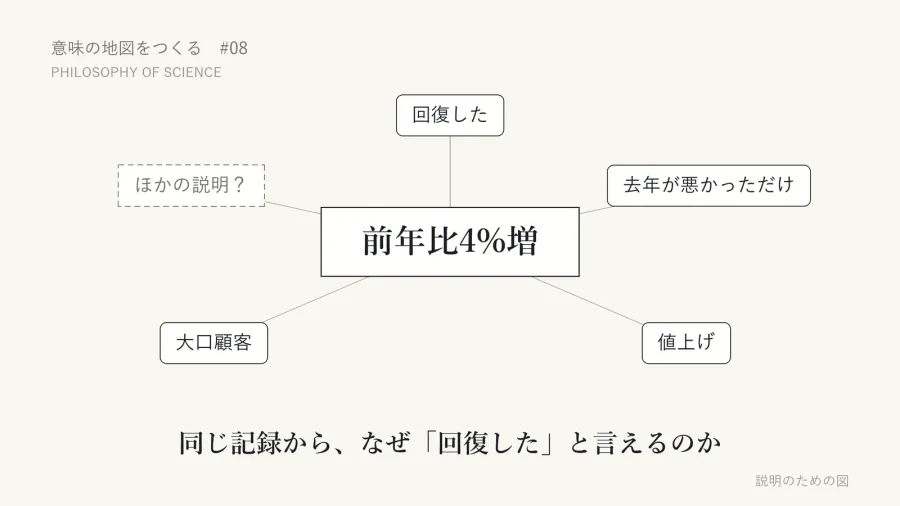
「前年比4%増」という正しい記録から、「今期は回復した」と言えるのか。科学哲学の確証、過小決定、データと現象の区別を訪ね、データから結論までのあいだを考える。シリーズ「意味の地図をつくる」第8回、第1期の最終回。
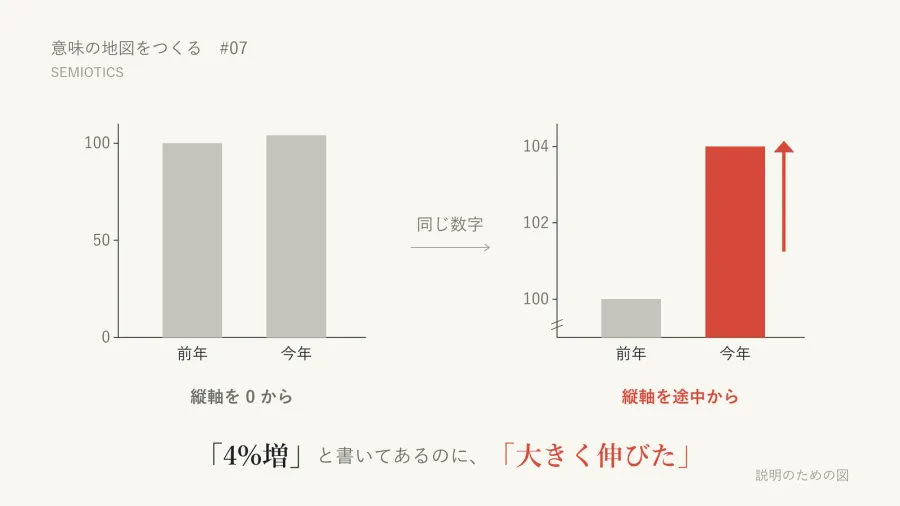
スライドの注記は「前年比4%増」。それでも会議の参加者は、縦軸が途中から始まる赤い棒グラフを見て「大きく伸びた」と受け取った。言葉で書かれていないことを、グラフや色や矢印はどう伝えているのか。シリーズ「意味の地図をつくる」第7回は記号論を訪ねる。